 IoT Voice API
Frequently asked questions
Which TTS API is best for IoT?
Our API is built for IoT startups needing reliable, lightweight audio generation. It uses a simple REST endpoint compatible with OpenAI SDKs, allowing easy integration into firmware or backend systems without complex infrastructure. With 60 requests per minute and support for 23 languages, it handles smart home and industrial audio needs efficiently.
How does OpenAI TTS compare to ours?
We use the same engine and request shape as OpenAI TTS. You can use the official OpenAI SDKs by changing the base_url to https://api.play8055.com/v1. Our pricing is $0.01 per 1,000 characters, and we support 8 voice presets. Unlike OpenAI, we accept USDT on TRON for top-ups and do not offer subscriptions.
Is Amazon Polly better for smart home devices?
Amazon Polly is a valid option, but our API offers a simpler REST interface compatible with OpenAI SDKs. We provide 8 specific voice presets like Aria and Felix, optimized for clarity. Our rate limit is 60 requests per minute, and we support 23 languages including English, Spanish, and German, suitable for global smart home devices.
What is the cheapest TTS API for IoT?
Our API charges $0.01 per 1,000 characters, with failed requests being free. The free trial offers $0.50 credit for 50,000 characters. We accept USDT on TRON for top-ups, starting at $5. There are no monthly plans or minimum spends, making it cost-effective for IoT startups with variable audio generation needs.
Do I need a large language model for TTS?
No, you do not need an LLM for text-to-speech. Our API takes plain text input up to 4096 characters and converts it directly to audio. You can send text from any source, including LLM outputs, but the TTS process itself is a straightforward synthesis step without requiring language model inference.
Which API has the lowest latency?
Our API processes requests sequentially, with typical speed of roughly real time (25 characters per second). Short phrases take a few seconds. Under load, requests may queue. We do not guarantee specific latency or offer streaming endpoints. Latency depends on server load and text length, with no SLA provided.
Are there free alternatives to OpenAI?
We offer a free trial with $0.50 credit, valid for 7 days, when signing in with Google. This covers about 50,000 characters. Accounts created with email/password start without trial credit. There are no other free tiers; top-ups require USDT on TRON. Failed requests are free, but successful ones are billed.
Does voice cloning matter for IoT?
Voice cloning is not offered. We provide 8 preset voices based on licensed recordings from LibriVox. These voices are static and cannot be customized or cloned. For IoT applications, consistent brand voice is achieved by selecting the appropriate preset, such as Felix for promos or Atlas for news, rather than custom cloning.
How do I compare API costs accurately?
Our pricing is $0.01 per 1,000 characters, including spaces and punctuation. Failed requests are free. Compare this against per-second or per-word models from other providers. Our API supports formats like MP3 and WAV, which may affect file size but not character count. Track characters used in your billing dashboard for accurate cost analysis.
Is SSML important for smart speakers?
We do not support SSML. Our API uses plain text input with optional language codes. If you need specific pronunciation or pauses, you can use standard punctuation or split text into multiple requests. For smart speakers, clear voice presets like Sage or Luna provide natural-sounding output without requiring SSML markup complexity.
Which API supports the most languages?
Our API supports 23 languages: Arabic, Chinese, Danish, Dutch, English, Finnish, French, German, Greek, Hebrew, Hindi, Italian, Japanese, Korean, Malay, Norwegian, Polish, Portuguese, Russian, Spanish, Swahili, Swedish, and Turkish. Any voice can speak any of these languages. We do not support Vietnamese, Indonesian, Thai, or Ukrainian.
Can I use multiple TTS APIs together?
Yes, you can use multiple TTS APIs. Our API is a standard REST endpoint compatible with OpenAI SDKs. You can integrate it alongside other providers in your backend. Each API has its own rate limits and pricing. Our API allows 60 requests per minute per key, with no minimum spend or subscription requirements.
What is the future of IoT voice APIs?
IoT voice APIs are evolving towards simpler, more cost-effective solutions. Our API focuses on reliability and ease of integration for startups. We support 23 languages and 8 voices, with transparent pricing via USDT. The trend is towards lightweight, RESTful APIs that integrate directly into firmware without complex infrastructure or proprietary SDKs.
How do I choose between MP3 and WAV?
Choose MP3 for smaller file sizes and efficient bandwidth usage, ideal for IoT devices with limited storage or network capacity. Choose WAV for uncompressed, high-quality audio, suitable for local playback or high-fidelity requirements. Both formats are supported via the response_format parameter. MP3 is generally preferred for streaming or storage-constrained environments.
Evaluation Criteria

Evaluating a TTS API for IoT requires balancing integration speed with operational cost. For embedded systems and backend services, the API must be straightforward to implement without heavy dependencies. We prioritize standards that reduce firmware overhead and simplify debugging across diverse hardware architectures.
Cost efficiency is critical for scaling voice features in consumer devices. We assess pricing models based on predictable per-character rates rather than complex tiered subscriptions. Format support ensures compatibility with existing media pipelines, avoiding unnecessary conversion steps in constrained environments.
API Simplicity
The IoT Voice API uses a standard REST endpoint compatible with common HTTP libraries found in most firmware SDKs. A single POST request returns audio, reducing code complexity. We compare this against competitors requiring multiple handshake steps or proprietary client libraries.
Authentication is handled via a simple Bearer token, eliminating complex OAuth flows. This direct approach minimizes integration complexity and ensures reliable connectivity even in low-bandwidth IoT scenarios.
- Standard REST POST endpoint
- Single-request audio retrieval
- Bearer token authentication
Cost Efficiency
Pricing is based strictly on character count, making costs predictable for any text length. We analyze total cost of ownership, including potential hidden fees for high-volume usage or specific format conversions. Competitors often charge per segment or minute, complicating budget forecasts for mass-produced devices.
The pay-per-character model allows precise cost allocation per device feature. We compare this against competitors with minimum monthly fees or tiered pricing that may penalize variable usage patterns common in IoT deployments.
Format Support
We evaluate support for lightweight formats like MP3 and OPUS, which offer good compression for network transmission. FLAC and WAV support is also assessed for high-fidelity industrial applications where lossless audio is required. PCM support allows direct streaming to hardware DACs.
Competitors often limit free tiers to MP3 or charge extra for WAV. We highlight how our format flexibility reduces storage and bandwidth costs for devices with limited memory or cellular data plans.
- MP3, WAV, OPUS, FLAC, PCM
- Low compression overhead
- Direct hardware compatibility
Our API: IoT Voice API

The IoT Voice API provides a straightforward REST endpoint for generating speech. Send a POST request to the standard endpoint with your text payload, and receive an audio file directly. This simplicity allows seamless integration into smart home firmware or backend services without requiring complex infrastructure or custom middleware.
Standard REST Endpoint
Interact with the API using standard HTTP methods. The endpoint accepts JSON bodies with text input, voice selection, and format preferences. This design ensures compatibility with existing IoT development stacks and allows for easy testing using tools like cURL or any standard HTTP client library.
- POST /v1/audio/speech for generation
- JSON request body structure
- Standard HTTP response codes
Pay Per Character
Pricing is based on character count, including spaces and punctuation. The rate is $10 per million characters, or $0.01 per 1,000 characters. Failed requests are free, ensuring you only pay for successful audio generation. This model eliminates monthly fees and minimum spend requirements, making it ideal for variable usage patterns in IoT deployments.
8 Preset Voices
Choose from eight licensed presets, including female voices like Aria and Nova, and male voices like Felix and Milo, as well as Atlas, Sage, Luna, and Orion. Each voice offers a distinct tone, from warm narrators to energetic promo styles. All voices support 23 languages, allowing you to localize your IoT applications easily without needing separate voice models for each language.
- Aria: Warm, clear narrator
- Felix: Energetic, promo style
- Atlas: Neutral, news style

Competitor: OpenAI TTS

OpenAI’s TTS API is widely recognized for its standard integration patterns, making it a common reference point for developers. Its tts-1 and tts-1-hd models use a familiar JSON structure, which reduces initial learning curves for teams already using OpenAI services.
Wide Recognition
The API leverages existing OpenAI SDKs across multiple languages, allowing IoT teams to reuse authentication and request logic without writing custom wrappers. This familiarity accelerates prototyping but does not guarantee lower latency for edge devices.
Higher Cost
Pricing is tiered by model, with the HD variant costing significantly more than the standard engine. For high-volume IoT deployments generating thousands of short audio files daily, these cumulative costs exceed simpler per-character models.
Complex Billing
Usage is billed in 100-millisecond increments, meaning even brief audio files incur minimum charges. This structure complicates cost forecasting for startups managing thousands of low-duration requests across multiple smart home devices.
Competitor: Amazon Polly

Amazon Polly is a mature TTS service deeply integrated into the AWS ecosystem. It offers standard neural voices and a broad language set, making it a common choice for enterprises already invested in Amazon’s cloud infrastructure.
AWS Ecosystem
Polly fits naturally into existing AWS workflows. If your IoT backend already uses S3, Lambda, or IoT Core, Polly integrates seamlessly without requiring new account setups or complex cross-service configurations.
Complex Setup
Beyond the API call, you must manage AWS IAM roles, permissions, and potentially Amazon Translate for multilingual support. This adds operational overhead compared to a single REST endpoint, which may slow down rapid prototyping for startups.
Instance Costs
Pricing is based on character volume, but you may also incur costs for associated AWS services like data transfer or storage. The billing structure is less transparent than a flat per-character rate, making total cost estimation harder for small-scale IoT deployments.
Competitor: Google Cloud TTS

Google Cloud TTS offers neural voices with high naturalness but requires a full Google Cloud project setup. This introduces overhead for IoT startups that need quick, lightweight integration without managing complex cloud infrastructure.
The pricing model scales with usage but often includes hidden costs for network egress and API calls. This makes budgeting less predictable compared to our flat per-character rate.
Neural Voices
Google provides advanced neural voice synthesis with nuanced intonation. While the audio quality is high, it often exceeds the needs of simple IoT notifications or smart home commands.
These voices support a wide range of languages, but accessing premium neural models can increase costs significantly compared to our standard presets.
- High-quality neural synthesis
- Support for multiple languages
Google Integration
Seamless integration with Google’s ecosystem is a strength for existing users. However, IoT devices often operate outside this environment, requiring additional authentication and configuration steps.
Managing API keys and service accounts adds complexity to your deployment pipeline, which may slow down rapid iteration for startup teams.
Usage Complexity
The API requires careful handling of quotas and billing units. Unexpected charges can arise from high-frequency polling or large audio file downloads.
Documentation is extensive but can be overwhelming for developers seeking a simple, drop-in solution for firmware or backend services.
Voice Quality Comparison

Voice quality is determined by eight distinct presets, ranging from warm narrators to deep documentary tones. Each voice is derived from licensed recordings, ensuring consistent clarity across different use cases. The synthetic nature is marked by an inaudible watermark, preserving authenticity without compromising audio fidelity.
Language support covers 23 languages, including English, Spanish, German, and Japanese. Any voice can speak any supported language, with automatic detection for Latin scripts. Unsupported languages like Vietnamese or Thai are not available, requiring explicit language codes for non-English Latin text to ensure accuracy.
Naturalness of Presets
The eight presets offer distinct character profiles suitable for IoT applications. Options include 'aria' for clear narration, 'nova' for upbeat updates, and 'atlas' for neutral news delivery. These voices provide consistent, reliable audio output without the variability of dynamic emotional shifts, ideal for standardized smart home prompts or industrial alerts where predictability matters more than expressive nuance.
- Aria: Warm, clear narrator
- Nova: Bright, upbeat
- Luna: Soft, storytelling
- Sage: Calm, instructional
- Felix: Energetic, promo
- Milo: Friendly, conversational
- Atlas: Neutral, news
- Orion: Deep, documentary
Language Support
The API supports 23 languages, allowing flexible deployment across global markets. Voices are language-agnostic, meaning you can select any voice for any supported language. For Latin-script texts in non-English languages, setting the language parameter is recommended to prevent default English detection. Languages such as Vietnamese, Indonesian, Thai, Ukrainian, Romanian, Czech, and Bengali are not supported.
Emotional Range
Voices do not support emotion tags or dynamic emotional inflection. Each preset maintains a consistent tone throughout the generation process. This design choice ensures predictable audio output for automated systems, avoiding unpredictable emotional shifts that might confuse users in smart home or industrial contexts. If specific emotional variation is required, it must be handled by selecting different presets for different segments.
Latency and Speed

Audio generation latency depends on text length. Short phrases take a few seconds. Long texts process at roughly real-time speed, approximately 25 characters per second. Requests are processed sequentially, so generation time scales linearly with input length.
Generation Time
Generation time scales with text length. Short phrases require a few seconds. Longer texts process at roughly real-time speed, generating about 25 characters of audio per second. This predictable rate helps you estimate total synthesis time before sending requests to the API.
- Short phrases: few seconds
- Long texts: ~25 chars/second
- Linear scaling with input length
Network Overhead
PCM support allows direct playback on hardware DACs. Other formats like MP3 or WAV require decoding layers on your device. Choose PCM for minimal processing overhead in resource-constrained IoT firmware, reducing CPU usage on edge devices.
- PCM: direct DAC playback
- MP3/WAV: requires decoding
- OPUS: efficient bandwidth usage
Queue Behavior
Requests are processed one after another. Under high load, your request may wait in a queue before synthesis begins. This means actual latency can exceed the generation time calculated from text length. Monitor your queue status via the API response headers to manage client-side timeouts effectively.
- Sequential processing
- Queue waits under load
- Check response headers for status
Integration Ease

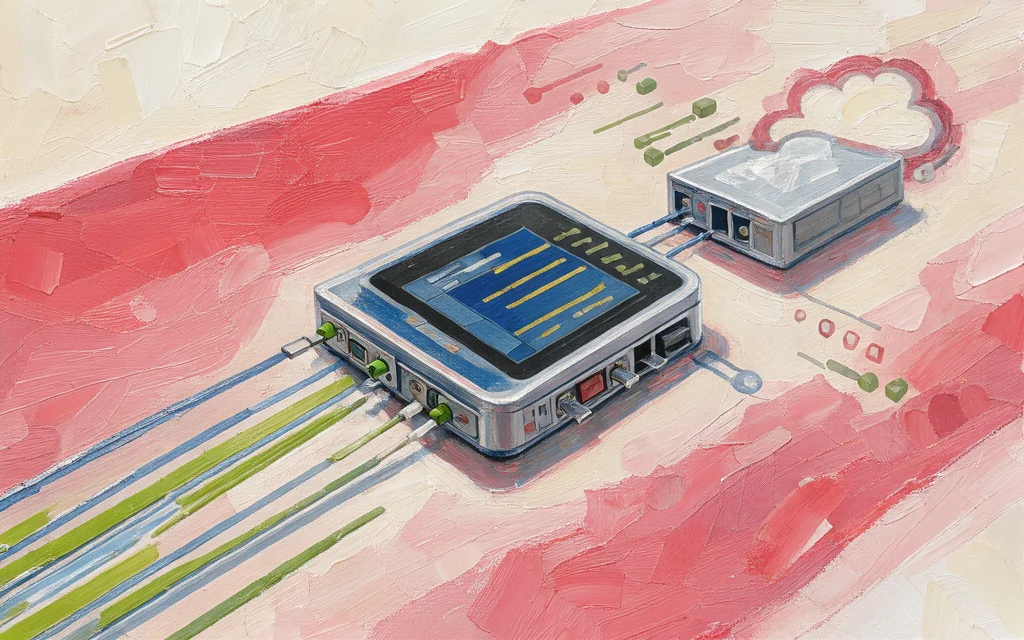
Integrating IoT Voice API into your firmware or backend is straightforward, leveraging standard REST patterns. Unlike providers requiring proprietary SDKs, our API works seamlessly with existing HTTP libraries, reducing dependency overhead in resource-constrained environments. You can use the official OpenAI SDKs by simply pointing them to our base URL, or send raw JSON payloads via standard POST requests.
Our documentation provides clear, copy-paste-ready examples for cURL, Python, and JavaScript, covering common IoT use cases like device notifications and status updates. The authentication flow is minimal: include your tts-... key in the Authorization header. No complex OAuth flows or signed headers are required, allowing for quick onboarding and reliable connectivity across varied network conditions.
SDK Availability
We do not maintain a dedicated mobile or firmware SDK. Instead, the API is designed to work with any standard HTTP client. This allows you to use lightweight libraries already present in your IoT stack, avoiding the need to bundle large, platform-specific SDKs that increase memory usage.
For convenience, the OpenAI SDKs work out-of-the-box by setting the base_url to https://api.play8055.com/v1. This ensures compatibility with existing codebases while keeping the integration footprint small.
- Compatible with any HTTP library
- Works with official OpenAI SDKs via base_url change
- No proprietary SDKs to download or maintain
Documentation Quality
Our docs provide concrete code examples for cURL, Python, and JavaScript, tailored for IoT scenarios like sending device alerts or status updates. Each example includes the full JSON body and expected response, allowing for immediate testing in your development environment.
The guide covers authentication, parameter usage, and error handling, ensuring you can resolve integration issues without waiting for support. All endpoints are clearly documented with request shapes and response formats.
- Copy-paste examples for cURL, Python, JS
- Covers auth, parameters, and errors
- Tailored for IoT use cases
Authentication Flow
Authentication is simple: include your API key in the Authorization: Bearer <key> header. No complex OAuth flows or signed headers are required. This simplifies integration in devices with limited processing power or network complexity.
You receive one active key per account, which can be rotated instantly if needed. This ensures secure access without the overhead of managing multiple credentials or tokens across your IoT fleet.
- Bearer token in header
- No OAuth or signed headers
- Instant key rotation
Pricing Transparency

Our pricing model is strictly linear: $10 per million characters, or $0.01 per 1,000 characters. Spaces and punctuation count toward the total. There are no hidden fees, per-request overheads, or tiered volume discounts to complicate your IoT cost projections.
Failed requests are free; if synthesis fails, the charge is returned in full. This ensures you only pay for successfully generated audio files, which is critical for budgeting in resource-constrained smart home devices.
Hidden Fees
We do not charge for API calls themselves, only for the characters processed. There are no monthly platform fees, no per-seat charges, and no extra costs for using different response formats like MP3 or WAV.
Free Tier Limits
New accounts signing in with Google receive a $0.50 trial credit, valid for 7 days, covering approximately 50,000 characters. Email-based accounts start without trial credit.
- Trial valid for 7 days only
- Email signups start with $0 balance
- No credit card required for trial
Top-Up Process
Balance does not expire. Top-ups are made via USDT on the TRON network (TRC-20) with a minimum of $5. Credits are automatically added within minutes of transfer confirmation.
- USDT (TRC-20) only
- Minimum top-up: $5
- No invoices or VAT
Data Privacy

Input text is used exclusively for audio synthesis and is not retained for model training. Generated audio files are returned in the response and are not stored on our servers after delivery.
Training Data Usage
Your input data serves only to generate the requested audio file. We do not use your text or resulting audio to improve our base models or train future voice presets.
Storage Policies
Generated audio is returned in the HTTP response and is not persisted. We retain request metadata, including timestamp, character count, and status, solely for accurate billing and usage verification.
Compliance
We do not offer specific compliance certifications such as HIPAA or SOC 2. The service is designed for general IoT applications without enterprise-grade data residency guarantees or on-premise deployment options.
- No HIPAA or SOC 2 certification
- No on-premise installation option
- No specific data residency guarantees
Scalability for IoT

Scalability for IoT deployments hinges on predictable request limits and efficient batch handling. Our API enforces a strict rate limit of 60 requests per minute per key, ensuring stable throughput without unexpected throttling during peak generation periods.
Rate Limits
The 60 requests per minute cap applies uniformly across all endpoints. This limit is sufficient for most smart home hubs processing localized voice prompts, though high-density industrial sensors may need to aggregate text before submitting a single request.
- 60 requests/minute per key
Batch Processing
For longer texts exceeding 4096 characters, clients must split input into manageable chunks and join the resulting audio files. This manual batching ensures consistent memory usage on constrained devices and allows for parallel processing of independent audio segments.
Concurrency
Requests are processed sequentially within the rate limit window. Under load, additional requests may queue briefly. This linear processing model prevents resource spikes, making it ideal for background audio generation in low-power IoT nodes.
- Sequential processing within limits

Final Recommendation

Choosing the right TTS provider depends on your specific deployment constraints. IoT Voice API offers a balanced solution for startups prioritizing predictable costs and straightforward integration without managing complex cloud infrastructure.
Our approach eliminates hidden fees and provides transparent, per-character billing. This model suits variable usage patterns common in smart home and industrial applications, ensuring you pay only for what you generate.
For Startups
IoT Voice API is optimized for small teams needing reliable audio generation without heavy engineering overhead. The simple REST API integrates directly into firmware or backend services, allowing rapid prototyping and deployment.
- Standard REST endpoint compatible with OpenAI SDKs
- No complex AWS or Google Cloud account setup
- Instant API key issuance upon sign-up
Best for Cost
With pricing at $10 per 1 million characters, costs remain predictable and low. Failed requests are free, and there are no monthly subscriptions or minimum spend requirements. Top-ups via USTRC-20 are processed quickly.
- $0.01 per 1,000 characters
- No hidden fees or tiered pricing
- Free trial credit available for new accounts
Best for Simplicity
Integration is straightforward: send text via POST request, receive audio. Support for multiple formats (mp3, wav, opus, flac, pcm) ensures compatibility with diverse IoT devices. Documentation is clear, and authentication uses a single API key.
- 8 preset voices covering 23 languages
- Simple speed adjustment (0.25–4.0)
- Easy base_url change for existing SDK users
Listen to the 8 voices
Each sample below was generated by this API from the same sentence. Transform your residential devices into an intuitive, connected ecosystem that delights modern homeowners.


23 languages
Any voice speaks any of these languages.
Sources and further reading
- Wikipedia
- Python documentation
- FFmpeg documentation
- Creative Commons Attribution 4.0
- TRON developer hub: TRC-20
- OpenAI API reference: create speech
- LibriTTS-R corpus (OpenSLR 141)
- openai-python on GitHub
- IETF RFC 7845: Ogg Opus
- LibriVox public-domain audiobooks
- LibriTTS-R paper (arXiv 2305.18802)
- openai-node on GitHub